
Lead follow-up
What happens when a lead doesn't answer the AI call?

Fivos Radis
Founder, Elite Architects · 3 min readListen to this article
Full article · 3 min
A lot of people aren't going to answer on the first call. That's why the call center has a follow-up sequence, rather than making one attempt and leaving it there.
We use a predetermined sequence across calls, texts and emails. We've developed it through our call-center work, and we customize it for what the client needs.
The next step is already in the sequence
After an unanswered call, the system continues through the sequence. The channels run in a specific order, with the timing agreed for that client.
I'm not going to give away the exact sequence here. The point is that the next action is planned and the system keeps track of what has already happened.
It isn't a separate caller and a separate texting agent who don't know what the other one did. They share the lead's conversation history.
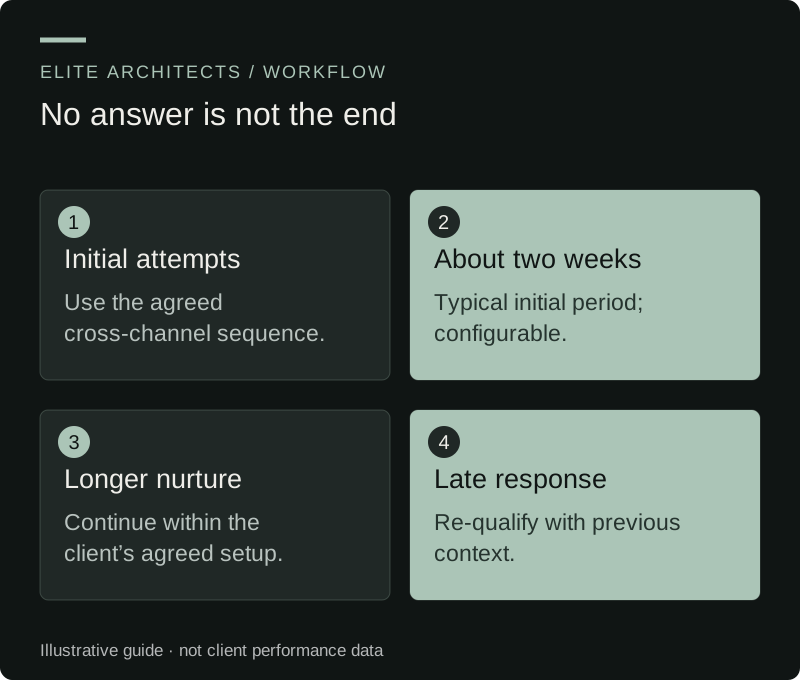
It usually runs for about two weeks
The initial sequence runs for about two weeks. We can customize it to be less frequent, more frequent or spread over a longer period, depending on what we agree with the client.
We also need to respect the person's contact permissions and requests. More persistent follow-up doesn't mean ignoring somebody who asks us to stop.
After that initial period, eligible leads generally go into a longer nurture sequence.
Some people need more time
The timing might not be right for somebody when they first enquire. They may still be interested later, which is why we nurture leads over longer periods of time.
If somebody responds months later, the system can requalify them. We want to know their current situation and whether the offer still fits what they need.
Then we work towards the next step for that client, usually an appointment or a live transfer to the sales team.
The agent has the earlier context
The call center has a centralized brain, with context across the channels and previous communications.
If somebody said they were busy or explained what they needed over text, that information is there for the next conversation. We don't want them repeating the same explanation every time.
The new conversation still needs to check what's relevant now. Somebody's situation can change while they're in nurture.
Booking and opt-outs stop the appointment chase
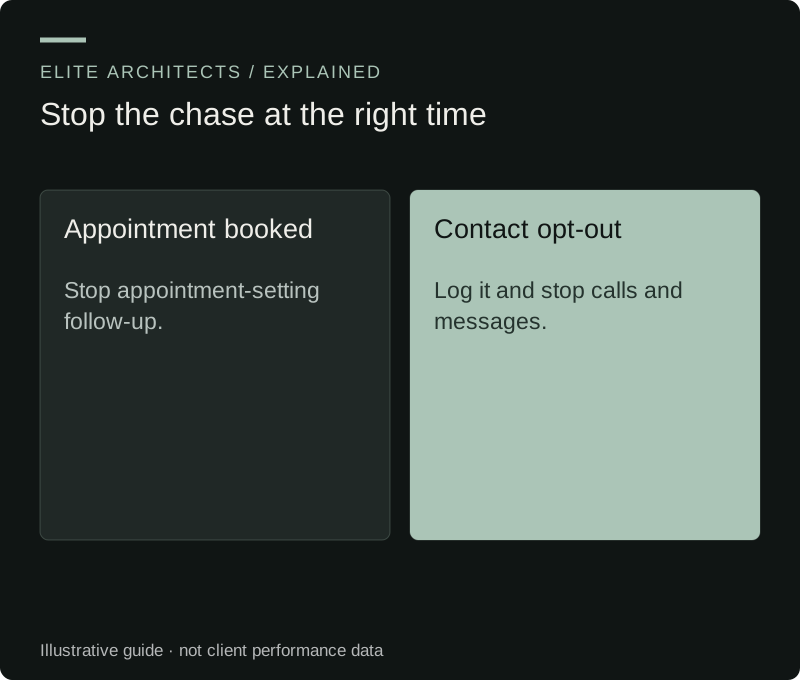
When somebody books, the appointment-setting follow-up stops. We send the confirmation and reminders for the appointment instead.
If somebody doesn't want to be contacted, we log it in real time. We don't call them back and we don't message them back.
We want the system to follow up properly without damaging your client's reputation. That means listening to what the lead has already told us.
Your agency doesn't have to manage the sequence
We set it up and run it under your brand. Your agency can offer the call center to clients without taking on the follow-up operation yourself.
Book your onboarding with me. We'll go through how your clients handle unanswered leads and how we'd set up the follow-up.